
Introduction
It’s 7:00 in the morning. The coffee is brewing, breakfast is on the stove, and you’re trying to get everyone out the door. Then you notice the kitchen sink isn’t draining.
The water rises.
Dirty dishes sit in standing water.
And suddenly your morning is off track.
Many homeowners in Washington DC assume a clogged kitchen drain is simply caused by food scraps. While that can be true, older DC rowhouses often have hidden plumbing issues that continue causing backups no matter how careful you are.
If you’ve found yourself plunging the same drain multiple times each year, you’re not alone. At DC Metro Plumbing & Heating Pros, we receive service calls throughout Washington DC and Maryland from homeowners dealing with recurring kitchen drain problems.
The good news is that recurring drain clogs almost always have an identifiable cause.
Let’s look at the five most common reasons kitchen drains keep clogging in DC rowhouses.
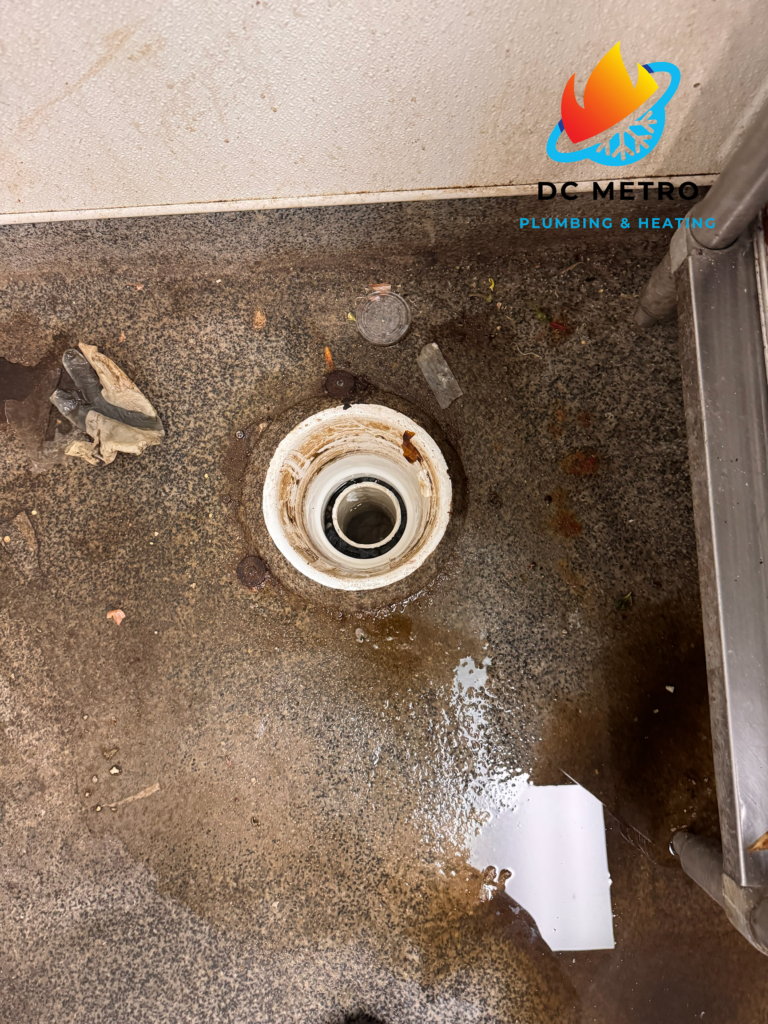
Why DC Rowhouses Are More Prone to Drain Problems
Many Washington DC rowhouses were built decades ago. While these homes offer charm and character, they often contain aging plumbing systems.
Older homes frequently have:
- Cast iron drain lines
- Galvanized piping
- Long horizontal drain runs
- Narrow branch lines
- Previous DIY repairs
These conditions create the perfect environment for recurring drain problems.

1. Grease Buildup Inside the Drain Line
The number one cause of kitchen drain clogs is grease.
Many homeowners pour cooking oils, bacon grease, butter, and fats down the drain without realizing the long-term damage being caused.
When grease cools, it hardens.
Over time it creates a sticky coating along the inside of the pipe. Food particles become trapped in the buildup until water can barely pass through.
Signs of grease buildup include:
- Slow drainage
- Gurgling sounds
- Bad odors
- Frequent backups
Many homeowners believe hot water solves the problem.
Unfortunately, hot water simply moves grease further down the pipe before it solidifies again.
Prevention Tips
- Dispose of grease in containers
- Wipe pans before washing
- Avoid pouring oils down drains
- Schedule professional drain cleaning when buildup becomes severe
2. Food Waste and Garbage Disposal Overload
Garbage disposals are convenient, but they aren’t designed to handle everything.
Common foods that cause clogs include:
- Rice
- Pasta
- Potato peels
- Coffee grounds
- Egg shells
- Celery
- Corn husks
These materials expand, tangle, or accumulate inside drain lines.
Coffee grounds are particularly problematic because they behave like wet sand and settle in low spots of piping.
Even homes with newer plumbing can experience significant drain issues when disposals are overloaded.
What Should Never Go Down a Disposal?
- Grease
- Bones
- Fibrous vegetables
- Large food scraps
- Starchy foods
3. Aging Cast Iron Drain Pipes
Many DC rowhouses still contain original cast iron drainage systems.
While cast iron is durable, it eventually deteriorates.
Inside older pipes, rust develops and creates rough surfaces.
Instead of flowing smoothly, debris catches on the corrosion.
As the interior diameter shrinks, even small amounts of food waste can create blockages.
Common warning signs include:
- Frequent clogs
- Sewer odors
- Rust-colored water near cleanouts
- Slow drains throughout the home
Professional camera inspections often reveal extensive internal corrosion in these older systems.
4. Partial Main Sewer Line Blockages
Sometimes the kitchen drain isn’t actually the problem.
The issue may be developing in the home’s main sewer line.
A partial sewer blockage restricts drainage from the entire house.
Kitchen drains are often the first fixture to show symptoms because they receive heavy daily use.
Warning signs include:
- Multiple drains backing up
- Toilets bubbling
- Slow bathtub drainage
- Sewer smells
- Water backing up into lower fixtures
Common causes include:
- Tree roots
- Pipe settlement
- Grease accumulation
- Broken sewer lines
If multiple fixtures are affected, professional sewer inspection is strongly recommended.
5. Improper Pipe Slope and Previous Repairs
Many older homes have undergone decades of renovations.
Unfortunately, not every repair was performed correctly.
Improper pipe slope is a common issue in older rowhouses.
When a drain line lacks sufficient pitch:
- Water moves slowly
- Solids remain behind
- Grease accumulates faster
- Clogs become more frequent
We regularly discover:
- Sagging drain lines
- Improper fittings
- DIY plumbing repairs
- Incorrect pipe sizes
A professional inspection can identify whether a structural drainage problem exists.
When Should You Call a Professional Plumber?
Many minor clogs can be resolved with simple cleaning.
However, recurring drain problems usually indicate a larger issue.
Contact a plumber if:
- The clog keeps returning
- Multiple drains are affected
- You smell sewer gas
- Water backs up frequently
- Chemical drain cleaners are no longer effective
Repeated use of chemical cleaners can actually damage older pipes and make future repairs more expensive.
Why Professional Drain Cleaning Works Better
Store-bought drain cleaners only attack part of the blockage.
Professional equipment completely removes buildup.
Methods may include:
Drain Snaking
Removes localized obstructions.
Hydro Jetting
Uses high-pressure water to scour the entire pipe interior.
Sewer Camera Inspection
Identifies hidden issues such as:
- Roots
- Cracks
- Corrosion
- Pipe collapse
These solutions address the root cause rather than simply treating symptoms.
Frequently Asked Questions
Why does my kitchen sink keep clogging even after using a drain cleaner?
Most drain cleaners only create a small opening through the blockage. The remaining buildup stays inside the pipe and continues collecting debris.
Are DC rowhouses more likely to have plumbing problems?
Yes. Many rowhouses contain aging drain systems that are more susceptible to corrosion, grease accumulation, and sewer line issues.
Can grease really cause major drain blockages?
Absolutely. Grease is one of the leading causes of kitchen drain clogs throughout Washington DC and Maryland.
Is hydro jetting safe for drain pipes?
When performed by a qualified plumber, hydro jetting can be a highly effective solution for removing buildup and restoring proper flow.
How often should drains be professionally cleaned?
Many homeowners benefit from professional drain maintenance every one to two years, depending on usage and pipe condition.
Conclusion
A clogged kitchen drain may seem like a minor inconvenience, but recurring backups often signal a deeper plumbing problem.
Whether the cause is grease buildup, aging cast iron piping, sewer line issues, or improper drainage, addressing the root cause can save significant time, money, and frustration.
The sooner the issue is identified, the easier it is to prevent costly plumbing emergencies.
Need Professional Drain Cleaning in DC?
DC Metro Plumbing & Heating Pros provides professional drain cleaning, sewer inspections, and plumbing services throughout Washington DC and Maryland.
📞 Call: 240-888-9739
🌐 Visit: dcmetroplumbingheating.com
Our experienced team can identify the real cause of recurring drain problems and help keep your plumbing system flowing properly year-round.